
Tracing Former Owners of a Brunswick County Property
Start with the parcel's latest deed. Its grantor points you to the conveyance before that, and the pattern repeats name by name. The Clerk serves as the local recorder and keeps deed books, plats, wills, and fiduciary records. The county's online dates are category-specific. No land-record cutoff is stated. Treat an online index result as one access point rather than a complete property history, because the county simply does not publish where its deed coverage ends.
| Source | Years It Covers | Where Held | What It Shows |
|---|---|---|---|
| Land records / deeds | Colonial period to present; online cutoff unpublished | Clerk books and SRA/COVERS | Transfers, parties and land descriptions |
| Judgments | Index 1996+; images 2001+ | Clerk / remote records | Recorded judgments and related references |
| Wills / fiduciaries | Index 1996+; images 2000+ | Clerk, with older books/archives to ask about | Estate authority and death-related transfers |
| Plats / surveys | Online date not published | Clerk and Planning | Platted lots, easements and map references |
A recent transfer starts in the remote land index. Confirm the image before trusting the index entry. Older deeds call for a different request: ask the Clerk for the applicable deed-book and grantor-grantee series. Inheritances need the probate file alongside the conveyance. For the land's shape, rely on a recorded plat instead of trying to read lot history from a GIS polygon alone.
Walk the Brunswick County Deed Chain Backward
Every link in a deed chain must refer to the same land, not just to a matching name. Parcels change addresses. A modern parcel can keep a deed description that names an older lot, farm tract, road, or neighbor. Write down the date, parties, and reference number first. Add the full legal description too. When a deed transfers only part of a tract, follow both the split description and its parent reference so the Brunswick County parcel chain stays intact.
- Find the latest conveyance tied to the parcel and read the grantee’s full vesting.
- Use that deed’s grantor as the next earlier owner to search.
- Confirm each older deed’s legal description against the land you are tracing.
- Repeat until the index no longer covers the date, then request the older book or index.
- Check probate when an estate, executor or administrator appears between deeds.
- Grantor
- The party transferring an interest in a recorded instrument.
- Grantee
- The party receiving the described interest.
- Chain of title
- The linked sequence of transfers tied to the same parcel or tract.
- Legal description
- Land-specific language that can outlast a street address.
Brunswick County Deed Coverage Has No Published Online Start
The Clerk's land records sit online. Reaching them takes an account name and password, and the site states no earliest deed year or image cutoff. The statewide portal may offer a free index where enabled and reserve images for authorized subscribers. That split shapes any Brunswick County property search. One date gets misread often. The 1996 figure belongs to judgment and will indexes, which publish their own coverage rather than a deed start.
When the deed you need is missing, call the Clerk at 434-848-2215 with the parcel, parties, estimated date, and description. Ask for the grantor-grantee index, deed book, or plat book series that covers that period.
Brunswick County Historic Deeds Lead Back to Courthouse Square
Brunswick County was organized in 1720. Lawrenceville became the county seat in 1814. The present courthouse went up in 1854 beside a Clerk's office built in 1893. That square still matters when online coverage ends. Historic chains live in the Clerk's books. The county marks no courthouse fire or records-loss event, so a missing online image has no destruction story behind it.
Older deeds may describe land by lot, courthouse reference, road, or adjoining landowner instead of a parcel number. The Virginia historic register entry for Courthouse Square describes this surviving county-seat group and helps anchor a Brunswick County property-history search.
Brunswick County Probate Records Can Bridge a Deed Gap
A dead owner can linger in an old deed. An executor or administrator often signs instead. The Circuit Court Clerk also serves as probate judge and custodian of wills and fiduciaries. The county indexes wills and fiduciaries from 1996. Images follow from 2000. Earlier material waits in the Clerk's older books or archival collection. A probate file may name the representative whose authority explains why a later deed is signed by someone other than the former owner of record.
Requests work best with details. Give the decedent name, approximate year, estate number if known, parcel or legal description, and any executor or administrator named in the deed. Remember the division of labor. A probate index is evidence about estate administration; the recorded deed shows the conveyance of the land.
Vital indexes help too, within limits. A death record can anchor the timeline. It cannot prove ownership or identify the deed that transferred the Brunswick County parcel. The Clerk's probate and land records make that connection. The Virginia Department of Health genealogy page explains which vital indexes are open to public search and for how long.
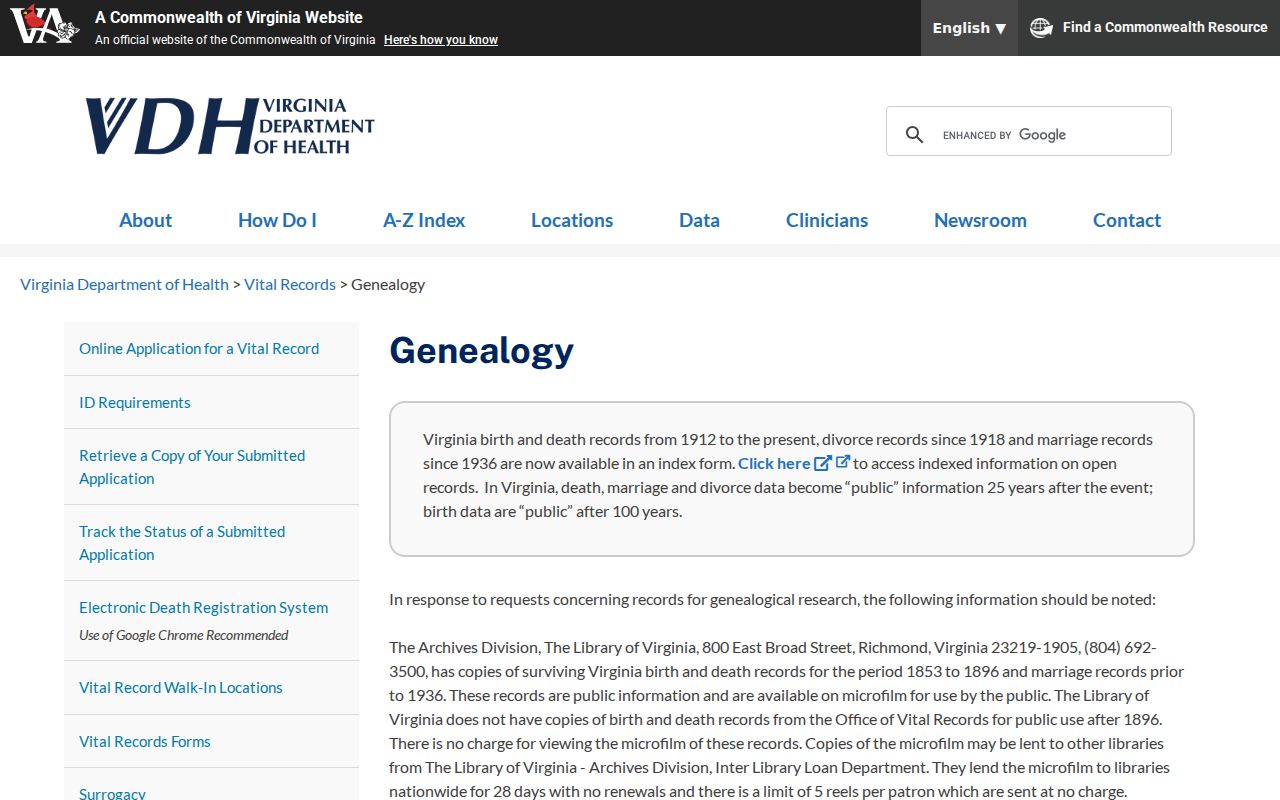
Treat a vital index as a clue only. The actual conveyance always rests in the recorded deed records held by the Clerk.
Brunswick County Former Owners May Appear Under Old Route Names
Old Brunswick County deeds rarely use modern numbered addresses. They point to roads, rail corridors, depots, and neighboring tracts instead. Local history explains why. The Atlantic and Danville Railroad reached Lawrenceville in 1889, and the town's market past layered commercial landmarks into deed language. Alberta adds a 1928 rail intersection. Brodnax sits where US 58 meets the railroad. These are clues, not subdivision names. Preserve any old route or landmark wording from the deed, then compare it against a plat or tax map. Never swap a historic legal description for a present-day mailing address until the parcel match is confirmed.
Brunswick County Older Records Have Library and Archive Routes
Older Brunswick County records live in archives beyond the courthouse. The Library of Virginia catalogs local government and court collections. It also covers land grants, chancery records, and historic vital records. Search its catalog for "Brunswick County" and "Lawrenceville." Then ask staff for the exact collection and reel before you travel. A complete Brunswick city-directory run and an exact FamilySearch deed collection are not guaranteed online records. Check those catalogs directly rather than assuming coverage.
Meherrin Regional Library is the local-history starting point named by the county. Ask whether it holds newspapers, reverse directories, local maps, or finding aids. A catalog may lead to a deed or plat image. Still match its description against the Clerk's record reference and the current tax parcel.
Brunswick County SRA/COVERS Starts the Recent Chain
Virginia Secure Remote Access, also called COVERS, covers the newer portion of a deed search. Brunswick's Clerk requires credentials. Applicants must call for the local application and fee procedure. The statewide portal allows index-only access where enabled, and it restricts images to clerk-authorized subscribers. Keep a book/page or instrument reference from any result. That detail makes a later counter request far more precise.
The Virginia SRA/COVERS portal is the online entry point for the remote land-record service.
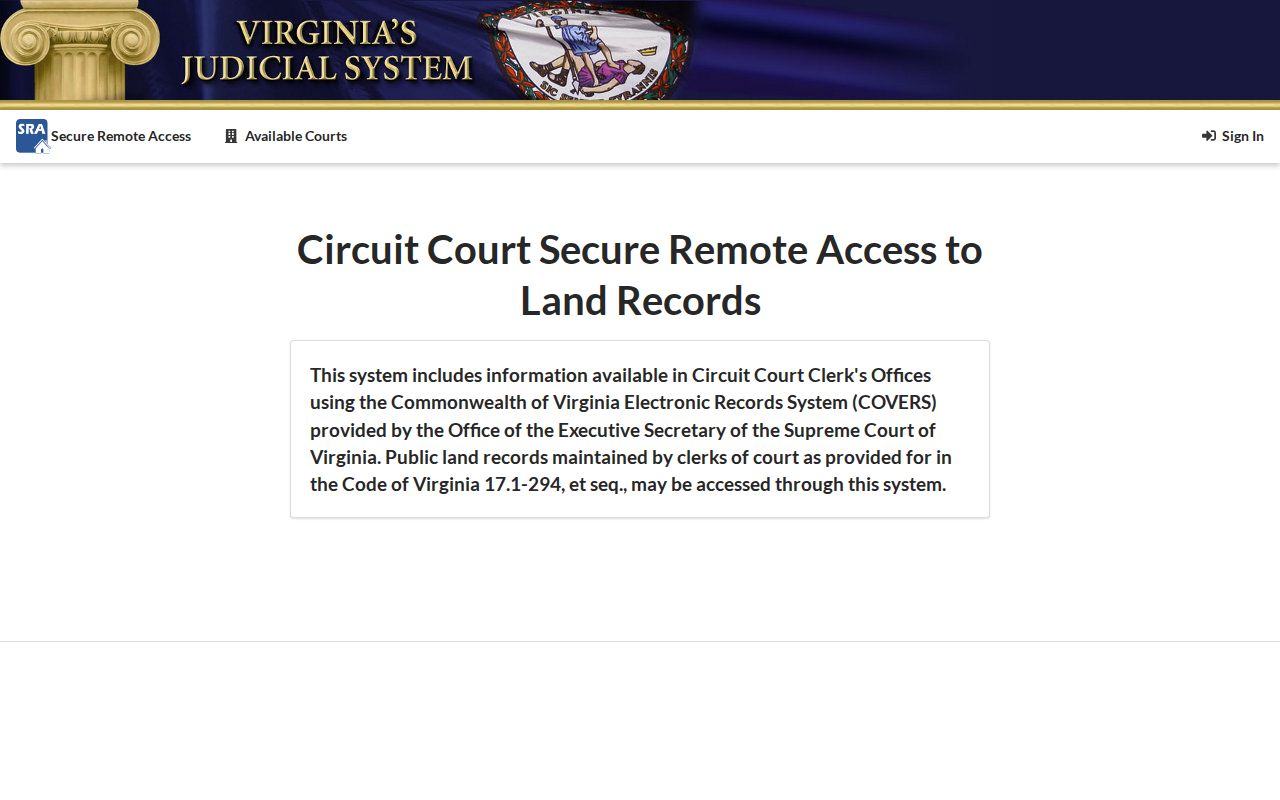
Use the portal for the years it exposes. When the historical chain predates the visible index, continue through the Clerk's deed books at the counter.
Connect Brunswick County Former Owners by Legal Description
Keep every link in a working sequence as you move deed to deed: transfer date, grantor to grantee, instrument type, and book/page or number. The legal description is the test. It proves each link belongs to the same land. A previous Brunswick County owner may have conveyed only part of a farm. He may also have combined several lots, so a name match alone can break the chain. When the description names a railroad, an old route, or an adjoining owner, preserve that clue. It will help the next search.
- Write down the latest deed’s grantee, grantor, recording reference and land description.
- Search the earlier grantor as grantee, then match the deed’s parcel or tract description.
- Repeat backward while checking for partial conveyances, estate deeds or boundary changes.
- When online coverage ends, ask for older books and indexes using the last reference you found.
- Grantor / grantee
- The parties who transfer and receive the described land interest.
- Chain of title
- The ordered sequence of recorded conveyances for the parcel.
- Book/page
- A locator used to identify a filed instrument in the Clerk’s books.
Brunswick County Deed Books Remain the Historic Fallback
The Clerk's office is the local route for deed books, grantor-grantee indexes, plats, survey maps, wills, and court records. It also holds the grantor-grantee indexes. The County FAQ directs deed and survey-map requests to the Clerk. Older online years remain unpublished. Give staff any modern parcel ID, older book reference, name, and tract description you have. Frame the request around the land and a known instrument. That is easier to separate from another owner with a similar name.
The Library of Virginia offers a second route for cataloged local-government or court material. An online catalog entry, though, does not prove a full deed image is digitized. Confirm the collection's coverage before you depend on it.
How Far Back Brunswick County Former Owner Records Reach
The county says Brunswick was organized in 1720. Land records run from the colonial period to the present. It publishes no online deed index start year. The recorded chain may therefore reach further through courthouse books. Local indexes may also reach further than a remote property search. No courthouse fire or destruction gap appears in the county's own history. Before concluding a missing record never existed, ask the Clerk about it. Ask where a specific date or document type is held.
Lawful use. Former-owner research supports property history and title diligence. Do not use names or addresses to track, harass or harm a living person.